 Apr 30, 2022·1 reply
 Scratchin Mamba
fr

every communist newsletter or blog ive seen has been ugly as s***
has to be a CIA psy-op, no way comrades are this untalented

 Apr 30, 2022
can we barrage this thread
ktt2.com/anybody-on-ktt2-play-dragon-ball-fighterz-32520180/1#post-36057081 Apr 30, 2022fun guy
fr
every communist newsletter or blog ive seen has been ugly as s***
has to be a CIA psy-op, no way comrades are this untalented
LMAOO deadass
- Apr 30, 2022
Mfs be like “yeah I read anarchist literature”
The literature: democrats.org/where-we-stand/party-platform
- May 1, 2022·1 reply
Happy birthday to Vietnam Liberation
- May 1, 2022space0cadet
Happy birthday to Vietnam Liberation
thats crazy i had pho for dinner

 May 1, 2022·1 reply
Post too funny, Lula losing by 20 pts
- May 1, 2022Lein
Post too funny, Lula losing by 20 pts
https://twitter.com/jairbolsonaro/status/1520554433062612993LMFAO WHAT THE F***
 May 1, 2022·1 reply
@Scratchin_Bandit just came across this book, wondering if you have u read "like ho chi minh! like che guevara!"?
- May 1, 2022·1 replyviscera
@Scratchin_Bandit just came across this book, wondering if you have u read "like ho chi minh! like che guevara!"?
Oh nah i never actually read that but that sounds really interesting what is it about?
- May 1, 2022·1 replyScratchin Mamba
Oh nah i never actually read that but that sounds really interesting what is it about?
its abt ethiopia's revolutionary left from 1969-1979.
- May 1, 2022viscera
its abt ethiopia's revolutionary left from 1969-1979.

Makes sense those two were the inspirations for the left, my dad was a young teenager and was out in the streets chanting che and fidels name during protests lmao
- May 1, 2022
I hate how when it comes to constructs like patriarchy and white supremacy people act like individual white people or individual men today are in any way responsible for designing it lol, people just can't seem to think in ways beyond individual responsibility
- May 1, 2022·1 reply
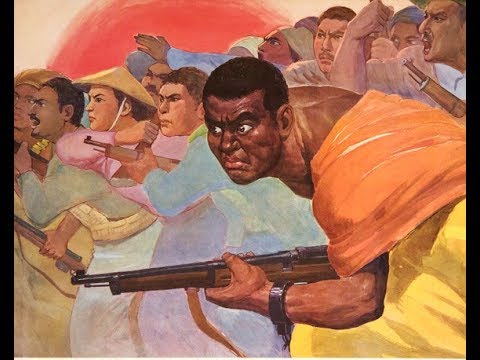
Happy May 1st yall
- May 1, 2022·1 reply
Great critique of liberal postcolonialism and why critiquing it is very important, never heard much if Vivek Chibber but ima look more into his works

- May 1, 2022·1 reply!https://youtu.be/1n0STknbrIkScratchin Mamba
Great critique of liberal postcolonialism and why critiquing it is very important, never heard much if Vivek Chibber but ima look more into his works
Copy pasted from that idpol thread:
Great critique of postcolonial theorists like Edward Said, really makes it clear why such a critique is important to the left, especially with regards to colonialism and thus by extension also identity politics.
Anti-racism and anti-colonialism has become essential for any political movement that claims to be leftist, but in their a***ysis of colonialist exploitation and orientalism (racism), they wrongly point to western essentializing attitudes on their future colonies as that which caused colonialism, instead of recognizing how colonial ideology changed over time from a "civilizing" mission to one which portrayed their colonies as unable to be civilized and unflexible unlike western societies. He goes more into detail in the history of how this process went and how they collaborated with local elites to make this happen.
But it's apparent that many times anti-colonial attitudes accept this notion that non-western societies are rigid and unable to change, and that thus any leftist class politics would be imposed from western theorists, and that it's not simply the case that western theorists observed this phenomenon first because capitalism developed first in the west.
I'm a lil incoherent because I'm in a rush to go to the gym but anyway, this is what motivated much of the shift of anti-racism and anti-colonialism which was overwhelmingly rooted in anti-capitalism all the way up until MLK to one which denied the importance of class in an a***ysis of colonialism. Wrongly arguing that such "crude materialism" is "class reductionist" and denies the importance of racism, or sees it as nothing more than epiphenominal to class, or even worse that class politics among non-westerners is actually imposed by westernwrs and is actually part of the colonial project
This has as a consequence the denial of a common humanity and cause of working people of all ethnic backgrounds which I think is at the center of the left's problem with identity politics. I would highly recommend watching that lecture tho, he articulated it a lot better than I did here.
- May 1, 2022·1 replyScratchin Mamba
Copy pasted from that idpol thread:
Great critique of postcolonial theorists like Edward Said, really makes it clear why such a critique is important to the left, especially with regards to colonialism and thus by extension also identity politics.
Anti-racism and anti-colonialism has become essential for any political movement that claims to be leftist, but in their a***ysis of colonialist exploitation and orientalism (racism), they wrongly point to western essentializing attitudes on their future colonies as that which caused colonialism, instead of recognizing how colonial ideology changed over time from a "civilizing" mission to one which portrayed their colonies as unable to be civilized and unflexible unlike western societies. He goes more into detail in the history of how this process went and how they collaborated with local elites to make this happen.
But it's apparent that many times anti-colonial attitudes accept this notion that non-western societies are rigid and unable to change, and that thus any leftist class politics would be imposed from western theorists, and that it's not simply the case that western theorists observed this phenomenon first because capitalism developed first in the west.
I'm a lil incoherent because I'm in a rush to go to the gym but anyway, this is what motivated much of the shift of anti-racism and anti-colonialism which was overwhelmingly rooted in anti-capitalism all the way up until MLK to one which denied the importance of class in an a***ysis of colonialism. Wrongly arguing that such "crude materialism" is "class reductionist" and denies the importance of racism, or sees it as nothing more than epiphenominal to class, or even worse that class politics among non-westerners is actually imposed by westernwrs and is actually part of the colonial project
This has as a consequence the denial of a common humanity and cause of working people of all ethnic backgrounds which I think is at the center of the left's problem with identity politics. I would highly recommend watching that lecture tho, he articulated it a lot better than I did here.
This isn't directly related to this post but do you think events derivative ethnoreligious motives like Zionism still fall under the hood of class conflict? Because while you can do a material a***ysis on how the situation has shaped in modern history chronologically (esp. in regards to european involvement), it does get kinda murky when you're looking at contradictory goals of its actors; that said, there's still class conflict happening a result of the actions there (namely just a result of the fact land is involved to begin with), but I don't think it's as clean cut as, say, struggles over means of production in the west - obviously given the world exists under global capitalism the Zionist conflict will always have capitalist elements though. However, purely in terms of motives, Zionism does actually lowkey kinda fill that gap liberals often misinterpret history over (i.e. thinking europeans were colonizing africa because the people were black, rather than colonizing it for resources). Obviously theres a dialectical view here of how material and culture co-exist too, so that's obviously gonna be an element here (esp in light of what i mentioned above w/ the conflict not being capitalistic but land being involved so therefore invoking material) but at the same time Zionism does precede both Capitalism and modern Imperialism so I'm not as sure if it's classifiable in the same direct manner as clean cut.
- May 1, 2022·2 replies
wait Foucault was pushed by the CIA in America cause they didnt want radical groups to read Marxism 😭 😭 😭
- May 1, 2022·1 replykrishna bound
This isn't directly related to this post but do you think events derivative ethnoreligious motives like Zionism still fall under the hood of class conflict? Because while you can do a material a***ysis on how the situation has shaped in modern history chronologically (esp. in regards to european involvement), it does get kinda murky when you're looking at contradictory goals of its actors; that said, there's still class conflict happening a result of the actions there (namely just a result of the fact land is involved to begin with), but I don't think it's as clean cut as, say, struggles over means of production in the west - obviously given the world exists under global capitalism the Zionist conflict will always have capitalist elements though. However, purely in terms of motives, Zionism does actually lowkey kinda fill that gap liberals often misinterpret history over (i.e. thinking europeans were colonizing africa because the people were black, rather than colonizing it for resources). Obviously theres a dialectical view here of how material and culture co-exist too, so that's obviously gonna be an element here (esp in light of what i mentioned above w/ the conflict not being capitalistic but land being involved so therefore invoking material) but at the same time Zionism does precede both Capitalism and modern Imperialism so I'm not as sure if it's classifiable in the same direct manner as clean cut.
I'll say that with modern zionism the reality is that it didn't become what it was until western imperialists used Israel for their own materialist imperialist interests post-WW2. I think it's pretty apparent that Israel wouldn't have expanded so much as it has now.
Of course, people can have their own theories on a bunch of things, but like fascism, I remember us having that discussion earlier, it is ultimately the material reality that shapes its practice and through that practice its ideology.
- May 1, 2022·1 replyScratchin Mamba
I'll say that with modern zionism the reality is that it didn't become what it was until western imperialists used Israel for their own materialist imperialist interests post-WW2. I think it's pretty apparent that Israel wouldn't have expanded so much as it has now.
Of course, people can have their own theories on a bunch of things, but like fascism, I remember us having that discussion earlier, it is ultimately the material reality that shapes its practice and through that practice its ideology.
Yeah the first part is definitely true, that's why I mentioned the thing about european involvement in my post.
I do think however that outside of that it's an interesting case study because the conflict isn't inherently fixed by solving class struggle - it's a prime example where much of the proletariat of palestine and israel are going to have serious conflict regardless of who owns the means of production or fairness of distribution of labor/material wealth.
Of course, there's always been instances of immaterial struggles historically (something I know Engels wrote a lot about), but there's a tendency I think for some theorists to think that solving material issues will also solve these issues - something which is only true in some cases (i.e. the example i used in the idpol thread about racism only mattering in a system which allows it to be extrapolated into a system where it becomes exploitative).
Not that I think that this should be a distraction from class a***ysis or class-based organization or anything (esp in the west lol), but I do think it's important to point out that some conflicts are indeed immaterial categorically and even solving the material conflict they dialectically incur on said material basis may not necessarily solve the cultural conflict in and of itself - May 1, 2022
that esp in the west hurt ngl
- May 1, 2022·1 replykrishna bound
Yeah the first part is definitely true, that's why I mentioned the thing about european involvement in my post.
I do think however that outside of that it's an interesting case study because the conflict isn't inherently fixed by solving class struggle - it's a prime example where much of the proletariat of palestine and israel are going to have serious conflict regardless of who owns the means of production or fairness of distribution of labor/material wealth.
Of course, there's always been instances of immaterial struggles historically (something I know Engels wrote a lot about), but there's a tendency I think for some theorists to think that solving material issues will also solve these issues - something which is only true in some cases (i.e. the example i used in the idpol thread about racism only mattering in a system which allows it to be extrapolated into a system where it becomes exploitative).
Not that I think that this should be a distraction from class a***ysis or class-based organization or anything (esp in the west lol), but I do think it's important to point out that some conflicts are indeed immaterial categorically and even solving the material conflict they dialectically incur on said material basis may not necessarily solve the cultural conflict in and of itselfWould you not agree that, since without the materialist western imperialist interests, zionist colonization would not be what it is, if it would even exist at all, it's still pretty clear that it can be understood as something with a material origin?
- May 1, 2022Womanpuncher69
wait Foucault was pushed by the CIA in America cause they didnt want radical groups to read Marxism 😭 😭 😭
i think i posted about this maybe 100 or so pages ago but yeah there's a lot of evidence the CIA pushed french intellectuals domestically to reshape the left movement away from actual marxism. its actually kinda similar w/ a lot of other movements here - i.e. gloria steinem, who was a massive influential 60s-70s new wave feminist, was just a straight up CIA asset (and so were many of the beatniks - esp Timothy Leary).
One thing I think that's important to mention though about the CIA pushing Foucault/Derrida/etc. is that it's not really as accurate to say they just entirely pushed these individuals w/o question, it's more like they pushed heavy purposeful or non-contextual misteachings and sometimes mistranslations of their work. This is esp the case with Foucault where the stuff that ended up in colleges tended to be heavily out of context excerpts or works outside of the actual entirety of the original framing - May 1, 2022Womanpuncher69
wait Foucault was pushed by the CIA in America cause they didnt want radical groups to read Marxism 😭 😭 😭
Not only that, they themselves studied Foucault lol
thephilosophicalsalon.com/the-cia-reads-french-theory-on-the-intellectual-labor-of-dismantling-the-cultural-left
